
Content Strategy for Dental Practices
A dental content strategy is a plan for what content to create, why, and for whom, so it brings patients rather than just filling a blog. It means choosing topics patients actually search, organising them into connected clusters, matching content to each stage of the patient’s decision, and publishing consistently. Done well, it builds authority, wins rankings, and turns readers into booked appointments.
Introduction
Most dental practices that “do content” simply post the occasional blog when they remember. It rarely works, because there is no plan behind it. Random articles on random topics do not build authority or bring patients. A strategy does.
This guide explains content strategy for dental practices in plain terms. It covers what to create, how to organise it, how to match it to what patients are thinking, and how to turn content into real enquiries. It is written for busy dentists, so it stays practical rather than theoretical. The goal is content that works, not content for its own sake, and a plan you can realistically follow alongside running a practice.
What Is a Dental Content Strategy?
A content strategy is simply a plan for your content. Instead of writing whatever comes to mind, you decide in advance what to create, which patients it is for, and what you want it to achieve.
It answers a few clear questions: what topics matter to your patients, what content will you make, how will it fit together, and how will you know if it works. Content is one channel within the bigger picture of dental marketing, and a strategy is what turns it from a chore into a source of new patients. Without one, content is just activity; with one, it is an asset that keeps working long after it is published.
Why Dental Practices Need a Content Strategy
Without a plan, content is a waste of time. Practices publish a few posts, see nothing happen, and give up, concluding that content does not work. The problem was never content, it was the lack of strategy.

A proper content strategy does several things:
- Builds authority. Covering your topics thoroughly signals real expertise to Google and patients.
- Brings the right patients. Content aimed at real searches attracts people looking for what you offer.
- Supports every other channel. Good content feeds SEO, social, email and even AI answers.
- Turns readers into patients. Content mapped to the patient journey guides people toward booking.
- Compounds over time. Unlike ads that stop the moment you stop paying, good content keeps working for years.
In short, strategy is the difference between content that quietly earns patients and content that quietly wastes hours. It is a core part of a full dental SEO marketing approach, and it builds on the foundations covered in what dental SEO involves. Google’s own advice on creating helpful, people-first content makes clear that content written genuinely for people, not search engines, is what wins.
Types of Content for Dental Practices
Content is not just blog posts. A dental practice has several types to work with, each doing a different job. The table shows the main ones.

| Content type | What it does |
|---|---|
| Treatment pages | Rank for and explain each service |
| Blog articles | Answer questions and build authority |
| FAQ content | Address common patient concerns |
| Guides | Cover a topic in depth, earn trust and links |
| Location pages | Target patients in specific areas |
| Video | Explain treatments and build connection |
A good strategy uses a mix. Treatment and location pages do the commercial work, while blogs, guides and FAQs build the authority and answer the questions that bring people in earlier. Each has a place, and together they cover far more ground than any one type alone. The mistake is relying on a single type, usually treatment pages, and expecting it to do everything, when it can only ever capture the patients already looking to book.
Content and the Patient Journey
The best content strategies match content to how patients think and decide. A patient researching a problem needs something very different from one ready to book. Mapping content to these stages is what makes it convert.
| Stage | Patient mindset | Content that fits |
|---|---|---|
| Awareness | Has a problem or question | Blogs, FAQs, guides |
| Consideration | Comparing options | Treatment info, comparisons |
| Decision | Ready to choose and book | Treatment and location pages |
Most practices only create decision-stage content, the treatment pages, and ignore the earlier stages. That means they only reach patients at the last moment, missing everyone still researching. Content across all three stages captures patients earlier and guides them toward you, which is where real content marketing pays off. Someone who reads your helpful guide while first worrying about a problem remembers your practice when they are finally ready to book.
Topic Clusters and Pillar Content
This is the heart of a modern content strategy, and it is simpler than it sounds. Instead of scattered posts, you group content into connected clusters around a main topic.
A cluster has two parts. A pillar page covers a broad topic in depth, for example dental implants. Around it sit cluster pages, each covering a specific sub-topic, such as implant cost, recovery, or suitability. They all link to each other. This structure tells Google you cover the topic thoroughly, which builds authority on it, and it helps patients find everything they need. Getting these internal links right matters, which is part of good on-page SEO. Planning clusters, rather than one-off posts, is what turns content into topical authority. It also stops two pages competing for the same search, since each one owns a distinct part of the topic rather than overlapping with its neighbours.
How to Build a Dental Content Strategy
Here is a practical, step-by-step way to build a content strategy for a dental practice. It moves from goals to a plan you can actually follow.

Set Clear Goals
Start with what you want. More implant enquiries, more patients from a specific town, or more visibility for a new treatment are all real goals. Vague aims like “more traffic” lead to vague content. Clear goals shape everything that follows, because they tell you which topics and which patients to prioritise rather than trying to cover everything at once.
Research Your Topics
Find out what patients actually search, rather than guessing. This is where content strategy uses keyword research to pick real topics, covered fully in the guide to keyword research. The output is a list of topics worth creating content for, based on real demand rather than what you assume patients want to read.
Plan Your Clusters
Group those topics into clusters around your main treatments and services. Decide the pillar pages and the cluster pages beneath them. This gives your content a structure instead of a random list, and it maps neatly onto a wider practice SEO plan. Even a simple cluster map, sketched on one page, makes the whole strategy easier to follow and to hand to whoever writes.
Create a Content Calendar
Turn the plan into a schedule. Decide what to publish and when, at a pace you can actually keep up. Consistency matters more than volume, so a realistic calendar beats an ambitious one you abandon after a month. Even one strong, useful piece a month, published reliably, builds authority over a year in a way that sporadic bursts never do.
Write for People and E-E-A-T
Create content that genuinely helps patients, written or reviewed by qualified clinicians. For health topics, showing real expertise is essential, which is the whole point of strong E-E-A-T. Helpful, credible content is what Google and patients both reward, and it is where a real practice has a natural advantage over generic, outsourced articles.
Optimise, Publish and Promote
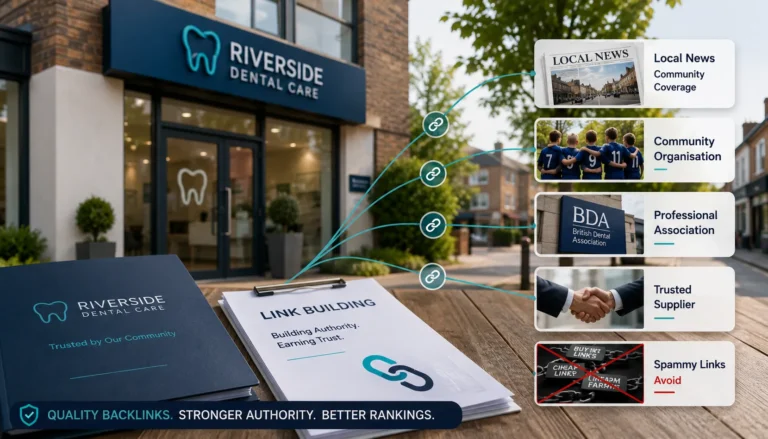
Optimise each piece so it can rank, publish it, and share it where patients will see it. Strong content that earns attention can also attract links, which ties into link building over time. Publishing is the start, not the end, because a piece nobody sees helps nobody, however good it is. A little promotion, through your profile, email list or social channels, gives good content the initial push it needs to be found.
Content for AI Search and AEO
Content strategy now has to account for AI. Tools like Google AI Overviews and ChatGPT answer patient questions directly, and they favour clear, well-structured, trustworthy content.
Writing content as clear questions and direct answers helps it get picked up by these tools, which is central to optimising for AI search. Question-based content, thorough coverage and genuine expertise all make a practice more likely to be the source an AI cites. A content strategy built for patients and clarity is already most of the way to being AI-ready, and it keeps you within Google’s Search Essentials, the basics every site needs to meet.
How to Measure Content Performance
Content without measurement is guesswork. Tracking a few things shows what works so you can do more of it.
Watch these:
- Rankings and impressions in Google Search Console, to see what content is gaining visibility.
- Traffic to each piece, to see what attracts readers.
- Enquiries and bookings that content leads to, which is what actually matters.
- Engagement, such as time on page, to see whether content genuinely helps.
The key is to link content back to enquiries, not just traffic. A page that brings ten readers who book beats one that brings a thousand who leave. Reviewing this regularly turns a content strategy into something that keeps improving, because you learn which topics and formats actually bring patients and can do more of what works.
Should Dentists Refresh Old Content?
Creating new content is only half the job. Existing content ages, and keeping it current is often easier and more valuable than writing something new.

A simple refresh routine helps:
- Review older pages once or twice a year, checking they are still accurate and useful.
- Update prices, treatments and guidance whenever they change, so nothing is out of date.
- Improve pages that are close to ranking, since a small update can push them up.
- Merge or remove thin, outdated posts that no longer serve a purpose.
Refreshing content signals to Google that a site is maintained and current, which matters for both ranking and trust. For a practice with a few years of posts behind it, tidying and updating what already exists can produce quicker wins than starting from scratch. It is the least glamorous part of a content strategy and often the most rewarding. A page that already ranks on the second results page can sometimes reach the first with nothing more than a thorough update.
Common Content Strategy Mistakes
Dental practices tend to make the same content mistakes. Avoid these:
- Publishing randomly with no plan or structure.
- Only creating treatment pages, ignoring the patients still researching.
- Chasing traffic instead of patients and enquiries.
- Thin, generic content that shows no real expertise.
- Giving up too soon, before content has had time to work.
- Never updating old content, letting it go stale.
Most of these come from treating content as a task to tick off rather than a strategy to follow. A plan fixes nearly all of them, because it replaces guesswork with clear decisions about what to create and why.
FAQ
What is a dental content strategy?
A dental content strategy is a plan for what content to create, for whom, and why. Instead of random blogging, it means choosing topics patients search for, organising them into connected clusters, matching content to each stage of the patient’s journey, and publishing consistently. The goal is content that builds authority and brings booked appointments, not just page views.
Why does a dental practice need a content strategy?
Because content without a plan usually fails. Random posts do not build authority or attract the right patients, so practices give up, thinking content does not work. A strategy targets real searches, covers topics thoroughly, and guides patients toward booking. It turns content from a time-wasting chore into a genuine source of new patients.
What content should a dental practice create?
A mix works best: treatment pages that explain and rank for each service, location pages for the areas you serve, and blogs, guides and FAQs that answer patient questions and build authority. Treatment and location pages do the commercial work, while the informational content reaches patients earlier in their decision.
What are topic clusters in dental content?
Topic clusters group your content around a main subject. A pillar page covers a broad topic like dental implants in depth, and cluster pages cover specific sub-topics such as cost, recovery or suitability, all linked together. This structure shows Google you cover the topic thoroughly, builds authority, and helps patients find everything they need in one place.
How often should a dental practice publish content?
Consistency matters more than frequency. Publishing one strong, useful piece a month that you keep up is better than a burst of posts you abandon. The right pace depends on your time and resources. A realistic, steady schedule builds authority over time, while an over-ambitious one that stops after a few weeks does little.
How do you measure if dental content is working?
Track rankings and impressions in Google Search Console, traffic to each piece, engagement like time on page, and most importantly the enquiries and bookings content leads to. The aim is to connect content to real patients, not just visits. A page that brings a few readers who book is worth more than one that brings many who leave.
Can a dental practice write its own content?
Yes, and there are real advantages to doing so, since the clinicians have genuine expertise that shows in the writing. The challenge is usually time and consistency, not ability. Many practices write the clinical substance themselves and get help with structure, optimisation and keeping to a schedule. Either way, real dental knowledge behind the content is a strength worth using.
Is a blog still worth it for a dental practice?
Yes, when it is part of a strategy rather than random posting. A blog aimed at real patient questions builds authority, brings people in earlier in their decision, and feeds AI answers. A blog with no plan, posting occasional generic articles, rarely helps. The difference is entirely in whether there is a strategy behind it.
Conclusion
A content strategy is what separates dental practices that win patients from content from those that waste hours on it. Choose topics patients actually search, organise them into clusters, match them to how patients decide, write with genuine expertise, and measure what brings enquiries. None of it is complicated, but it does need a plan rather than guesswork.
Start with clear goals and a handful of well-planned clusters, then build steadily. The practices that win with content are not the ones that publish the most, but the ones that plan, stay consistent, and keep improving what they have. To turn this into a content plan mapped to the right patients and keywords for your practice, start with a free dental SEO audit, which shows where the content opportunities and gaps are, including for the local searches that matter most to your local SEO.